The Bronco is already serious hardware out of the factory. The Badlands has locking diffs and a capable suspension. The Raptor has 418hp, a factory-widened track, and live valve damping that most modified trucks never reach.
But there’s still a gap between “factory capable” and “properly built” and the right mods close it fast.
Here’s what actually moves the needle, ranked by impact on real trail performance. Not by how good it looks in photos. By whether it makes the truck meaningfully more capable in the dirt.
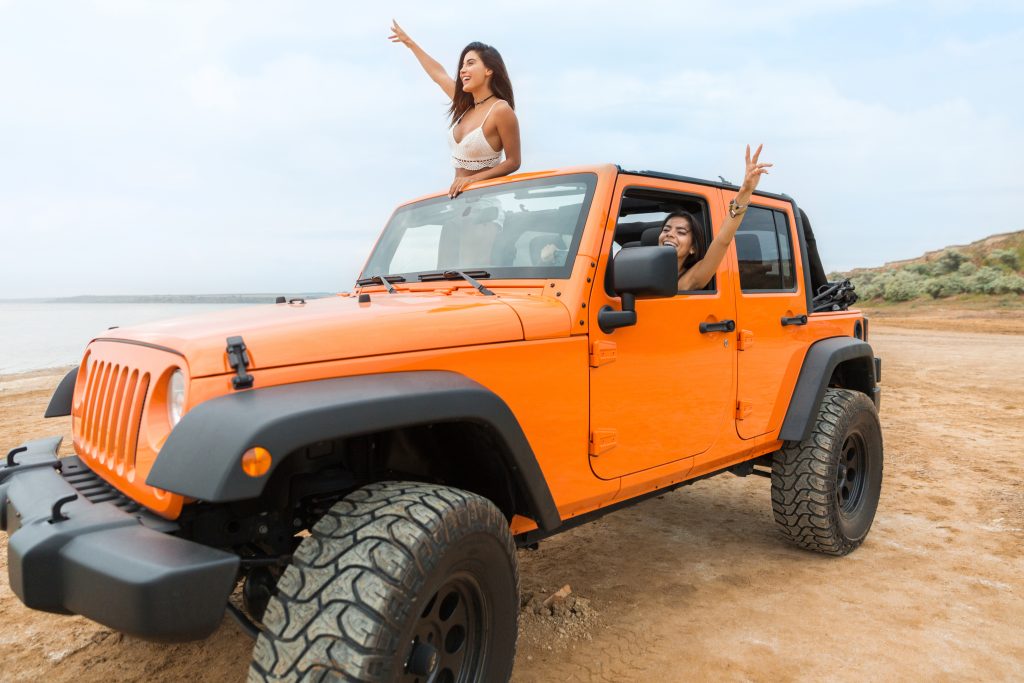
1. Suspension Lift Kit
Impact: Transformative
The foundation of almost every serious Bronco build. A lift does three things at once:
- Raises ground clearance the measurement that determines whether you drive over an obstacle or get stuck on it
- Improves approach, departure, and breakover angles
- Creates room for larger tires, where capability gains really compound
Which size lift for which use case:
| Use Case | Lift Height | Tire Size |
| Daily driver / light trail | 2–3 inches | 35s |
| Mixed street and trail | 3–4 inches | 35–37s |
| Dedicated trail build | 4–6 inches | 37s+ |
Brands worth knowing: Fox and King for high end performance and longevity. Rough Country and ReadyLIFT for strong value on appearance focused builds.
One thing that separates a quality install from a bad one: alignment correction after the lift. Skip it and you’ll destroy your tires inside of a year. Every reputable builder handles this automatically.
2. Tires and Wheels
Impact: High
Tires are the only point of contact between the truck and the terrain. Everything the suspension and drivetrain does feeds through them. Get this wrong and every other upgrade is undermined.
The 35 vs. 37 debate simplified:
| 35-inch All-Terrain | 37-inch Mud-Terrain | |
| Off-road traction | Strong | Excellent |
| Daily drivability | Good | Compromised |
| Road noise | Manageable | Loud |
| Lift required | 2–3 inches | 4+ inches |
| Fender trimming needed | Usually no | Often yes |
For most builds, 35s on a 2 3 inch lift hit the sweet spot. 37s are for trucks that actually live on trails.
Two wheel specs buyers frequently overlook: Load rating (the wheels must handle the Bronco’s actual weight especially in Raptor spec) and backspacing/offset (affects how the tire sits relative to the fender under full compression). A specialist handles both as standard. Buying wheels and tires independently without checking these is how builds develop rubbing problems and handling quirks.
3. Skid Plates
Impact: High for trail use invisible everywhere else
Skid plates don’t change how the truck performs. They change what happens when something goes wrong.
What full underbody coverage protects: Oil pan, transmission, transfer case, fuel tank, rear differential.
The real world difference:
Without adequate skids, hitting a rock shelf with the oil pan = oil draining on the trail, recovery call, tow truck.
With full steel coverage, the same impact = a sound you’d rather not hear and a reason to slow down. The truck keeps moving.
For any Bronco that sees genuine rocky or technical terrain, full skid coverage is not optional. It’s the mod that makes everything else sustainable.
Popular Bronco specific options: Cali Raised LED, Fishbone Offroad, Westin.
4. Locking Differentials
Impact: High on technical terrain
Quick check first: The Badlands and Raptor come with front and rear lockers from the factory. If you’re building on either trim, this is already handled.
For all other trims Base, Big Bend, Black Diamond, Outer Banks, Wildtrak this is the upgrade that most significantly expands where the truck can go.
Why it matters: An open differential sends power to the wheel with the least resistance. Lose traction on one wheel and that’s where all the power goes. The truck stops moving.
A locker links both wheels on the axle mechanically, forcing them to spin together regardless of traction conditions. The truck drives through.
Electronic lockers are driver selectable engage them on trail, disengage on pavement. The difference on a rocky climb or in loose sand is immediate and dramatic.
5. Steel Front Bumper with Recovery Points
Impact: Moderate to high
Factory bumpers create two specific problems on trail:
- They extend the approach angle, meaning the bumper contacts steep terrain before the tires lose traction
- They lack purpose rated recovery points for actual vehicle recoveries
A quality steel front bumper addresses both. It improves the approach angle by several degrees (which translates directly into steeper terrain the truck can climb), and integrates proper D-ring mounts rated for recovery loads.
Most aftermarket steel bumpers are also winch ready which sets up the next upgrade.
Popular options: Warn, Smittybilt, Fab Fours all with Bronco specific fitment.
6. Winch
Impact: Situational but critical when you need it
The mod most buyers delay until they’ve needed one and didn’t have it.
Minimum spec for the Bronco: 9,500 to 12,000 lb pulling capacity given the truck’s weight.
Basic recovery kit to pair with it: Rated recovery strap, Drings, tree saver strap, recovery gloves.
The winch by itself does relatively little without the recovery kit. Together, they turn a stuck on a remote trail situation into a 20 minute self recovery. Most regular trail drivers consider this close to mandatory equipment. Occasional off roaders should treat it as serious insurance.
Warn and Smittybilt are the benchmark brands for Bronco fitment.
7. LED Lighting Package
Impact: Moderate
Factory lighting is calibrated for street driving. On unlit forest roads or desert terrain after dark, it’s not enough.
Standard setup for most builds:
- Roof mounted LED light bar (the Bronco’s rail system makes this a clean, no-drill install)
- Pod lights on the front bumper for close range fill
- Rear facing lights for camp setup and reversing on dark trails
On brand selection: The gap between budget and premium lighting is significant. Baja Designs and Rigid Industries produce substantially higher output and hold up to vibration and moisture over years of off-road use. KC Hilites is the strong mid range option. Cheap LED bars from unknown brands tend to fail within a season of regular use.
8. Exterior Wrap or Custom Paint
Impact: No off road performance benefit but significant everywhere else
Wraps don’t change how the truck performs. That needs to be said clearly.
What a quality wrap does:
- Defines the visual identity of the finished build
- Protects factory paint from UV, rock chips, and brush debris on trail
- Has real implications for resale value and how the truck is perceived in the market
The range of options is essentially unlimited matte, satin, gloss, color-shift, two-tone, military palettes, bold solids. Some builders have turned specific wrap treatments into a product category in themselves. FL Auto Sales Group’s custom pink Bronco line is a direct example of a distinctive exterior treatment defining an entire build identity, rather than just finishing one.
How to Combine These Mods Based on Your Use Case
Trail-focused build: Suspension lift + tires + skid plates + lockers (if not factory equipped) + bumper + winch. Lighting and wrap once the capability foundation is solid.
Street build with light off-road use: Lift + wheels and tires + wrap. The full skid and recovery kit setup is less critical if the truck isn’t going anywhere remote enough to need them.
Either way: execution quality matters more than parts selection. A lift installed without alignment correction, wheels spec’d without checking load rating, or a wrap applied over unprepped paint these are how good looking custom builds become expensive problems.
FL Auto Sales Group in Tampa integrates all of this into cohesive builds from the start Raptor builds, lifted Outer Banks trucks, widebody conversions — and ships finished vehicles nationwide. For buyers who want the finished truck without managing the build process, they’re worth knowing about. Browse their current custom Ford Broncos inventory directly.


